


February 3, 2026
Recreational activities fuel all regions of the state
Key Findings
- Outdoor recreation supports sustained employment and payroll across Oregon. Ski areas alone support between 900 and 1,800 jobs annually, with payrolls rising from $13.6 million in 2001 to more than $52 million in 2024, reflecting both seasonal demand and long-term wage growth.
- Fishing, hunting, and wildlife watching generate over $1.2 billion in statewide spending. In 2019, recreational fishing, hunting, and wildlife watching collectively produced more than $1.2 billion in participant spending and supported thousands of jobs, with economic activity distributed across all 36 counties and particularly important to rural economies.
- Golf combines steady local employment with tourism-driven spending. Golf travel generated roughly $218 million in visitor spending in 2019, while tournaments and destination courses contribute additional localized economic impacts and support wages that exceed many other recreation sectors.
- Destination climbing sites generate high per-visitor economic value. At Smith Rock State Park, climbing activity generates an estimated $25 million in annual economic value, driven largely by sole-purpose visitors whose travel spending supports surrounding communities.
- National parks remain a consistent source of visitor spending and jobs. In 2024, Oregon’s national park visitors generated approximately $91.4 million in spending, supporting an estimated 943 jobs and $45.5 million in labor income statewide
- Resident outdoor recreation generates large non-market economic value. Oregon residents record roughly 1.27 billion outdoor recreation activity days annually, producing an estimated $57.1 billion in net economic value, reflecting the welfare benefits of access to outdoor amenities beyond direct spending or fees.
- A re-introduction of waiver liability would boost economic growth and jobs. Based upon the results of modeling a reduction in insurance costs of between 5% and 15%, the state can expect to see in 2027 alone:
- Additional jobs created between 2,582 and 8,373;
- Increased GDP of between $175 million and $575 million;
- Additional business sales of between $298 million and $980 million;
- Increased personal income of between $170 million and $551 million.
INTRODUCTION
While professional sports franchises and apparel manufacturing tend to dominate public discussion of Oregon’s sports economy, a substantial share of sports-related economic activity occurs outside stadiums and formal competition. Outdoor recreation—ranging from skiing and golf to fishing, climbing, and national park visitation—generates sustained economic activity through employment, visitor spending, and resident participation across the state. Understanding the size, composition, and drivers of this activity provides important context as policymakers consider proposals that could affect how outdoor recreation businesses operate in Oregon.
In recent legislative sessions, outdoor recreation has also entered broader policy discussions around business risk, consumer protection, and the economic sustainability of recreation providers. Proposals related to recreational liability standards have renewed attention on how legal frameworks interact with inherently hazardous activities and the businesses that provide them. These discussions raise important questions about the scale of outdoor recreation in Oregon and the potential economic implications of changes affecting the sector.
This report provides economic context for those discussions by examining the size, composition, and economic contribution of selected outdoor recreation activities in Oregon. Rather than attempting to measure the full scope of recreation activity, the analysis focuses on sectors where reliable data are available and impacts can be quantified using established methods. Together, these activities illustrate how outdoor recreation contributes to Oregon’s economy through both destination-driven visitation and widespread resident participation, providing a foundation for evaluating policy considerations affecting the sector.
Background
As the 2025–26 ski season gets underway, the upcoming short legislative session is preparing to revisit the issue of liability waivers—an area shaped by Bagley v. Mt. Bachelor, Inc. since 2014. Companies that provide recreational services routinely require participants to sign liability waivers as a condition of access. While the 2014 ruling did not automatically invalidate these waivers, it significantly limited their enforceability by allowing courts to closely scrutinize and, in some cases, invalidate them.
Recreational businesses argue that liability waivers play a central role in managing risk in inherently hazardous activities such as skiing, climbing, and rafting. According to these operators, waivers help limit legal exposure, reduce insurance costs, and keep participation affordable for consumers. Many further assert that uncertainty surrounding the enforceability of waivers has created a pressing need for legislative clarification, warning that continued ambiguity could lead to higher premiums, increased litigation risk, and delayed or foregone investments—particularly for smaller or seasonal providers that operate on thin margins. These claims are frequently presented as time-sensitive, with operators emphasizing potential future impacts rather than citing widespread business closures or service reductions to date.
Oregon lawmakers have considered similar liability waiver reforms several times in recent years, reflecting ongoing debate about the impact of the Bagley decision on recreational businesses. In the 2025 regular session, legislators introduced House Bill 3140, which would have allowed recreational operators to require customers to waive claims for ordinary negligence, and Senate Bill 1196, which was amended to include similar liability provisions after HB 3140 stalled. Both bills received committee activity and testimony but ultimately did not reach a final vote before the session ended. Supporters pointed to broad bipartisan sponsorship and committee hearings, while opponents raised concerns about consumer protections and legal recourse for injury claims. The legislative concept has returned for the 2026 short session in the form of HB4071 and SB1593.
The following section examines employment trends in Oregon’s ski industry as one observable indicator of industry activity during the period when liability standards were evolving.
Industry Employment Trends Following the Bagley Decision
Industry discussions surrounding recreational liability often assume that legal changes materially alter economic outcomes for outdoor recreation providers. A natural starting point for evaluating these claims is to examine whether observable indicators of industry activity—such as employment—changed during the period when liability standards were evolving.
This section examines employment trends in Oregon’s ski industry over the past two decades, with particular attention to the period surrounding the 2014 Oregon Supreme Court decision in Bagley v. Mt. Bachelor, Inc. Employment provides a consistent and measurable indicator of industry activity in a highly seasonal sector where staffing levels closely track operational capacity.
Using annual employment data for Oregon’s ski industry, we test whether employment growth rates differ before and after the 2014 Bagley decision. The null hypothesis is that employment growth followed the same trajectory before and after the decision. To account for ski-season timing, we treat 2015 as the post-decision period. The analysis estimates a linear time trend with an interaction term for the post-2015 period and includes statewide nonfarm employment as a control for broader labor market conditions. The results show no statistically significant difference in employment growth across periods. Although employment fluctuated during the mid-2010s, the analysis does not provide evidence that these fluctuations were caused by the Bagley decision, nor that they reflect a lasting change in the industry’s employment growth path.
Importantly, the absence of a detectable change in employment growth does not imply that operating conditions were unaffected during this period. Recreation providers may have adjusted to evolving liability standards through a combination of higher prices, changes in insurance coverage, altered risk management practices, or internal cost absorption. In a sector characterized by strong demand and limited substitutes—particularly for destination skiing—such adjustments may not immediately translate into reduced employment. However, when combined with external pressures such as abnormal weather conditions, delayed season starts, or rising insurance costs, these underlying dynamics may help explain why liability issues periodically reemerge in legislative discussions despite relatively stable aggregate employment outcomes.
Figure 1
Why Has the Liability Issue Reemerged in Recent Legislative Sessions?
Although historical employment data do not indicate a lasting change in industry growth following the Bagley decision, recreational liability has reemerged as a policy issue in recent legislative sessions. The renewed attention appears less connected to observed changes in employment or participation and more closely tied to evolving cost and risk considerations faced by recreation providers.
Industry stakeholders have pointed to rising insurance premiums, changes in coverage availability, and continued legal uncertainty as factors increasing operating costs over time. Unlike employment or output, these pressures may not immediately translate into observable reductions in staffing or services. Instead, they are more likely to affect margins, pricing decisions, and long-term investment planning, particularly for smaller or seasonal operators with limited ability to absorb cost increases.
Importantly, these cost pressures appear to have intensified gradually rather than emerging immediately after the 2014 court decision. Insurance markets and risk assessments often adjust over time as claims experience, litigation patterns, and underwriting practices evolve. As a result, the current policy debate reflects longer-run adjustments in the cost structure of outdoor recreation businesses rather than a discrete economic disruption tied directly to the timing of the Bagley ruling.
This distinction helps explain why liability reform has resurfaced despite limited evidence of past employment impacts. The debate centers less on whether outdoor recreation activity has persisted in Oregon and more on how legal risk and associated costs are allocated within the sector, and whether existing market adjustments are sufficient to sustain operations under current liability standards.
To estimate the missing job growth in the outdoor sector from the higher insurance costs related to the inability to gain some sort of certainty of potential liability costs through waivers, CSI employed REMI PI+ and its Production Cost variable for the sector. The following figure provides the results of a 15% reduction in insurance costs. Given that legislative testimony indicated that 15% is what outdoor companies typically pay for liability insurance—and acknowledging that the entire 15% would not go away with the reintroduction of liability waivers, the results presented in the following figure should be considered as the maximum impact if the outdoor industry saw a 15% drop in insurance costs. The actual savings to outdoor businesses may range between 5% and higher. Because of the uncertainty, the 5% figure is also reported, offering a range of the impact of a reintroduction of waivers.
Overall, missing job growth for the outdoor recreation industry is somewhere between 2,582 and 8,373. Should liability waivers be re-introduced, the state can expect to see these jobs created in the industry, GDP to be boosted by between $175 million and $575 million, sales to expand by between $298 million and $980 million, and personal income to expand by between $170 million and $551 million.
Figure 2
Skiing in Oregon
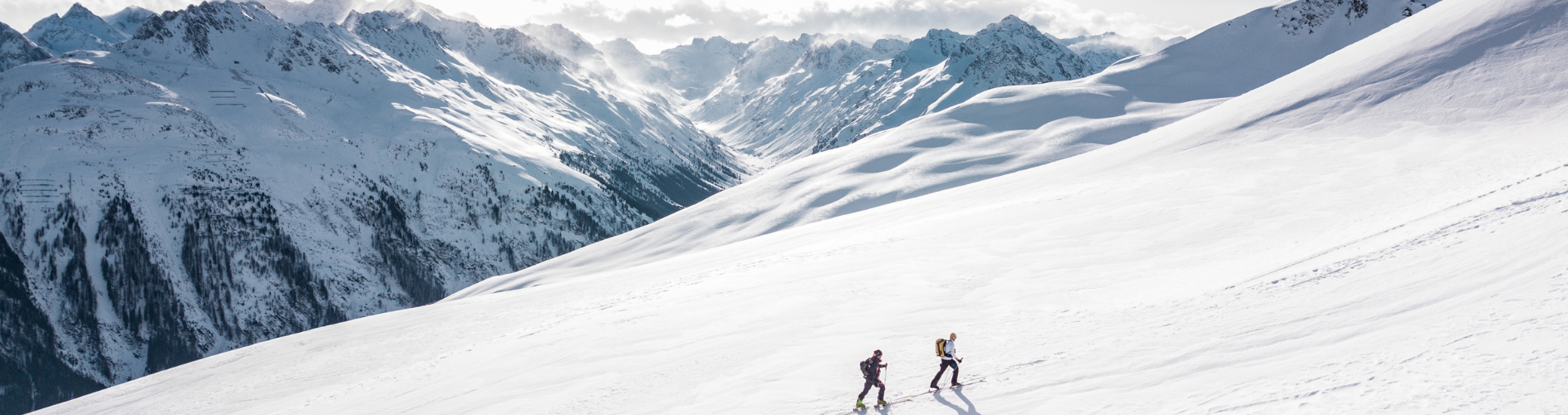
Ski areas are one of the state’s most visible intersections of recreation and sports. Employment in Oregon’s ski industry has hovered between 900 and 1,800 jobs over the past two decades, with payrolls climbing from about $13.6 million in 2001 to more than $52 million in 2024. Jobs and wages track with winter demand: employment peaks during ski season and tapers off in spring and summer, reflecting the highly seasonal nature of the industry.
Figure 3
Beyond the numbers, Oregon’s ski economy is shaped by broader trends in the national resort market. A 2022 study by the University of Oregon’s Oregon Consulting Group noted that ski and snowboard resorts nationwide generated $2.5 billion in revenue in 2021, with projected annual growth of about 6.7% through 2026. [i] Yet that outlook comes with caveats. There is the possibility that climate change may alter snowpack and season length, particularly for resorts below 6,000 feet, while shifts in demographics also pose challenges: Baby Boomers are skiing less, millennials participate less frequently, and Gen Z remains underrepresented in the sport.
To adapt, ski resorts—including those in Oregon—are investing in snowmaking, diversifying into year-round recreation, and leaning on new business models such as e-commerce passes (Epic, Ikon) and first-time skier incentives. These strategies help sustain jobs and wages even as natural conditions grow less predictable.
Fishing, Hunting, and Wildlife Watching in Oregon
Fishing, hunting, and wildlife watching represent long-standing components of Oregon’s outdoor recreation economy, with participation and spending distributed across all 36 counties. Unlike some destination-based recreation activities that are concentrated in specific locations, these activities generate economic activity statewide and are particularly important to rural communities.
According to a 2019 statewide economic analysis, recreational fishing generated approximately $397 million in participant spending, while hunting accounted for about $228 million in spending across Oregon.[ii]Wildlife watching, which includes activities such as birding and wildlife viewing, contributed an additional $579 million in spending. Combined, these three activities generated more than $1.2 billion in total spending statewide in 2019.
This spending supported substantial employment and income across Oregon’s economy. Recreational fishing supported an estimated 3,669 jobs statewide, while hunting supported approximately 2,219 jobs. Together, fishing and hunting generated nearly $200 million in labor income, including roughly $124 million associated with fishing and $72.5 million associated with hunting. Wildlife watching also supported thousands of additional jobs and contributed significantly to wages and local economic activity.
Figure 4
Golf Courses and Country Clubs in Oregon
Switching to another important sports sector in the state, Oregon’s golf industry blends steady local demand with a notable tourism draw. According to a statewide study, golf travel generated roughly $218 million annually in visitor spending in 2019, reflecting the appeal of Oregon’s courses to out-of-state players and vacationers.[iii]Facilities like Pumpkin Ridge, which has hosted major tournaments including Korn Ferry Tour and LPGA events, illustrate how competition can bring additional economic activity. A 2019 Korn Ferry event, for example, created an estimated $6.5 million local impact.
Golf courses and country clubs also function as community anchors, supporting steady employment and payroll across the state. While Oregon’s golf workforce is modest in size compared to other leisure sectors, the combination of local memberships, tournaments, and travel helps sustain wages above many other recreational industries.
Figure 5
Rock Climbing in Oregon: Smith Rock
Rock climbing represents a smaller but economically meaningful segment of Oregon’s outdoor recreation economy, anchored by destination sites such as Smith Rock State Park. Unlike many outdoor activities that are primarily local or incidental, climbing is often destination-driven, attracting visitors who travel specifically to access high-quality routes and landscapes.
Recent economic research provides a rare, quantified estimate of the value generated by climbing in Oregon. Using climbers’ observed travel behavior, a study of Smith Rock State Park estimates that the average economic value generated per climbing visit is just over $215, even after applying conservative methodological corrections. When aggregated across annual visits, this translates to more than $25 million in annual economic value attributable to climbing activity at Smith Rock alone.
Figure 6
At Smith Rock, this demand is reflected in substantial visitor volumes. Based on Oregon Parks and Recreation Department visitor surveys referenced in the study, Smith Rock receives approximately 746,000 visitors annually, an estimated 21 percent of whom are rock climbers, or roughly 157,000 climbers per year. Survey evidence further indicates that about three-quarters of climbers are sole-purpose visitors, meaning their primary reason for traveling to the region is climbing at Smith Rock. These visitors incur travel-related expenses—including transportation, lodging, food, park fees, and gear purchases—that translate into direct economic activity in surrounding communities.
In addition to sole-purpose climbers, the remaining visitors engage in multi-purpose trips, combining climbing with other destinations and activities in Central Oregon. While consumer surplus estimates in the study are conservatively applied only to sole-purpose visitors, multi-purpose trips still contribute to regional spending through extended stays and broader travel patterns. Taken together, visitation levels and spending behavior illustrate how strong demand for a single, high-quality outdoor site can translate into real economic activity, even though the consumer surplus measure itself reflects economic value rather than direct economic contribution.
Smith Rock represents only one destination, but it provides a useful benchmark for understanding how destination-driven outdoor recreation generates visitation and travel spending. Where broader visitor spending and employment data are available—such as for Oregon’s national parks—these same demand dynamics can be observed at a larger scale. In the next section, we draw on Oregon National Park visitor spending and employment data to illustrate how destination-driven outdoor recreation translates into broader economic effects at the regional and state level.
National Parks in Oregon
Oregon’s National Park Service units represent a core component of the state’s destination-based outdoor recreation economy. Unlike many local or incidental recreation activities, national parks attract visitors from outside their immediate regions, generating measurable visitation, spending, and associated economic activity at the state level.
Visitation across Oregon’s major national park units—including Crater Lake National Park, John Day Fossil Beds National Monument, Lewis & Clark National Historical Park, and Oregon Caves National Park—has varied over time, reflecting site-specific conditions and access factors. As shown in Figure 7, Crater Lake consistently accounts for the largest share of recreation visits, while other units attract smaller but persistent visitor volumes.
Figure 7
Aggregated across all Oregon National Park Service units, total recreation visits ranged from approximately 875,000 in 2012 to a peak of over 1.3 million in 2016, before moderating in subsequent years (Figure 7). These visitation levels provide the basis for estimating visitor spending and related economic measures at the state level. Visitor spending associated with national park visitation represents a meaningful source of economic activity in Oregon. Between 2012 and 2024, total visitor spending ranged from approximately $58.5 million to $97.5 million annually, with spending remaining relatively elevated even in years when total visitation declined. In 2024, national park visitors generated approximately $91.4 million in total spending statewide.
Figure 8
Visitor spending associated with Oregon’s National Park Service units supports employment, labor income, and economic activity across the state. (Figure 8) Visitor spending and related economic measures increased through the mid-2010s as visitation rose, with employment linked to national park visitation peaking at approximately 1,640 jobs statewide in 2016. While visitation and spending have moderated since that period, national parks continue to generate meaningful economic activity in Oregon.
In 2024, national park visitors generated approximately $91.4 million in total spending statewide. That spending supported an estimated 943 jobs, produced about $45.5 million in labor income, and contributed roughly $79.0 million in value added to Oregon’s economy, with total economic output of approximately $131.0 million. These figures reflect the ongoing role of national parks as destination-driven recreation assets that support economic activity beyond park boundaries.
Figure 9
Taken together, visitation and spending data show that Oregon’s national parks function as durable components of the state’s outdoor recreation economy. Although visitation patterns vary across individual park units and over time, statewide totals demonstrate that national park visitation is consistently associated with visitor spending and employment at the state level. As a result, national parks provide a useful benchmark for understanding how destination-based outdoor recreation translates into broader economic activity in Oregon.
Resident Outdoor Recreation in Oregon: Net Economic Value
In addition to visitor spending and employment effects, outdoor recreation in Oregon generates substantial non-market economic value for residents. The Oregon Statewide Comprehensive Outdoor Recreation Plan (SCORP) estimates the total net economic value residents derive from outdoor recreation by measuring participation levels and willingness to incur time and travel costs to access recreational opportunities.[iv]
At the statewide level, Oregon residents recorded an estimated 1.27 billion outdoor recreation activity days annually, generating approximately $57.1 billion in total net economic value (2023 dollars). This measure reflects the economic value residents place on access to outdoor recreation beyond any fees paid or expenditures made and captures the scale of demand for recreational opportunities across the state.
Aggregate SCORP estimates show that the largest shares of resident net economic value are associated with high-frequency, widely accessible activities, including walking, hiking, biking, and nature viewing. These activities account for a substantial portion of total activity days and net economic value, reflecting their broad participation across age groups and regions. While these activities generally involve low per-trip spending, their frequency results in very large aggregate value statewide.
Other activities—such as fishing, boating, camping, and winter recreation—generate higher net economic value per activity day but account for a smaller share of total participation. Together, these patterns highlight that resident outdoor recreation value in Oregon is driven primarily by access, proximity, and frequency of use, rather than by destination travel or high individual expenditures.
Importantly, these resident net economic value estimates are conceptually distinct from visitor spending and employment measures reported elsewhere in this report. Whereas visitor spending reflects market transactions that support jobs and economic output, net economic value captures the welfare benefits residents receive from recreational access. Considered together, these measures illustrate that outdoor recreation contributes to Oregon’s economy through both market-based activity and non-market value tied to resident quality of life and access to natural amenities.
Bottom Line
Outdoor recreation is a durable and economically meaningful part of Oregon’s sports economy, generating sustained employment, visitor spending, and resident value across the state. While often overshadowed by professional sports and manufacturing, activities such as skiing, fishing, hunting, golf, climbing, and national park visitation collectively support thousands of jobs, hundreds of millions of dollars in annual spending, and substantial non-market value for Oregon residents. Together, these sectors illustrate how outdoor recreation contributes to Oregon’s economy through both destination-driven tourism and widespread local participation, with especially important impacts in rural communities and regions anchored by high-quality natural amenities.