In the aftermath of the COVID-19 pandemic and trillions of dollars of pandemic relief spending by the federal government, the rate of inflation in the U.S. has grown sharply in 2021 and become one of the most-discussed economic issues of the day. High inflation levels erode savings and increase the costs of daily commutes, groceries, and other consumer goods. This threatens the financial health of Colorado citizens and the strength and swiftness of the state’s ongoing economic recovery.
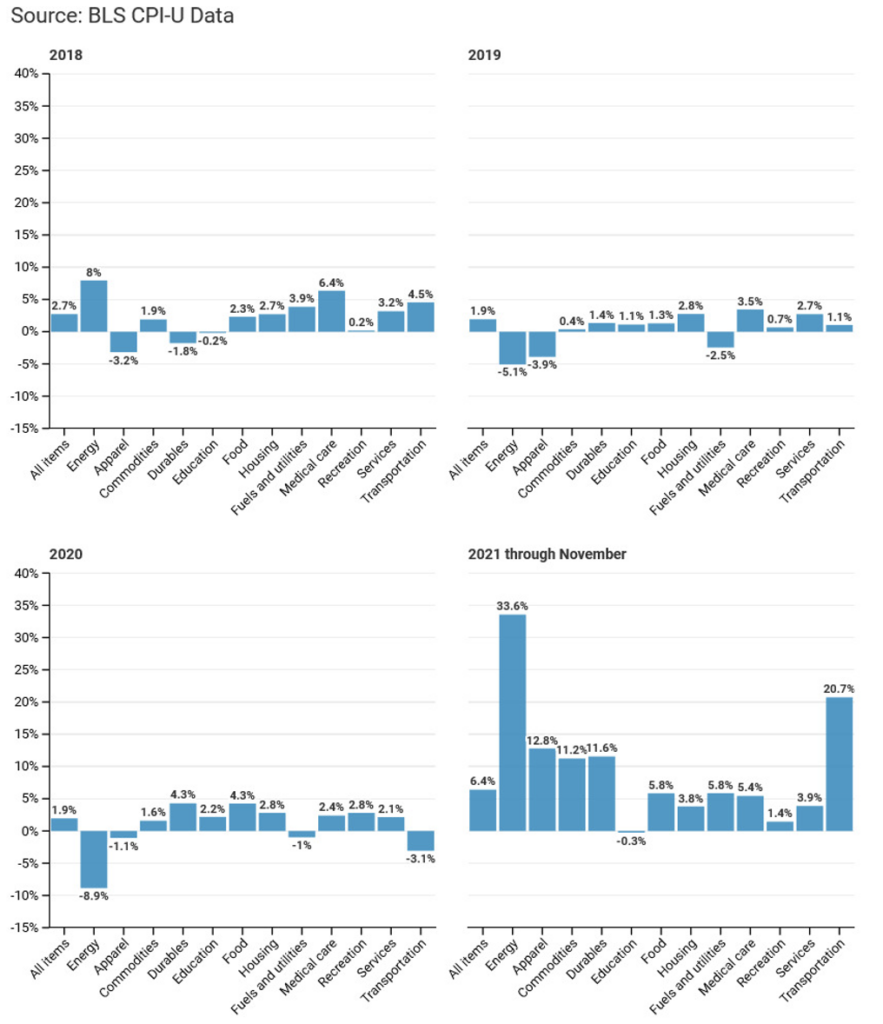
- Overall, prices in the Denver metropolitan area increased by 6.4% over the last year. Nationally, they increased by slightly more (6.8%).
- Although the bulk of this increase occurred during the second quarter, a resurgence of growth between September and November indicates that this is a persistent trend.
- Of the 23 urban consumer price indices tracked by the BLS, Denver-Aurora-Lakewood's ranks 9th in total growth since the end of 2020.
- By November 2021, the prices of energy and transportation had risen to 33.6% and 20.7% higher than they were in 2020, respectively.
- The price of food 5.8% is higher than it was in 2020. This is larger than every yearly increase since 1990.
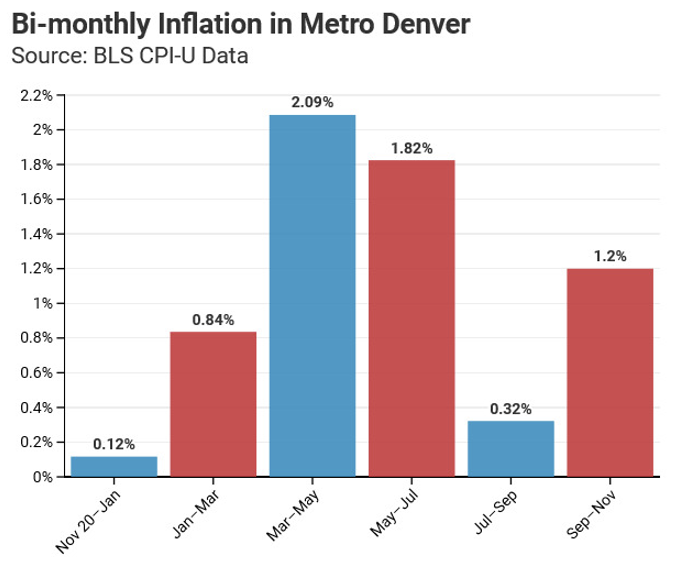 Price Changes in Metro Denver over the Previous Year
© 2021 Common Sense Institute.